


Indian White Ring Neck Parakeet Parrot – Hand-Fed Exotic Parrot
Pure White Indian Ring Neck Parakeets with Rare Elegance
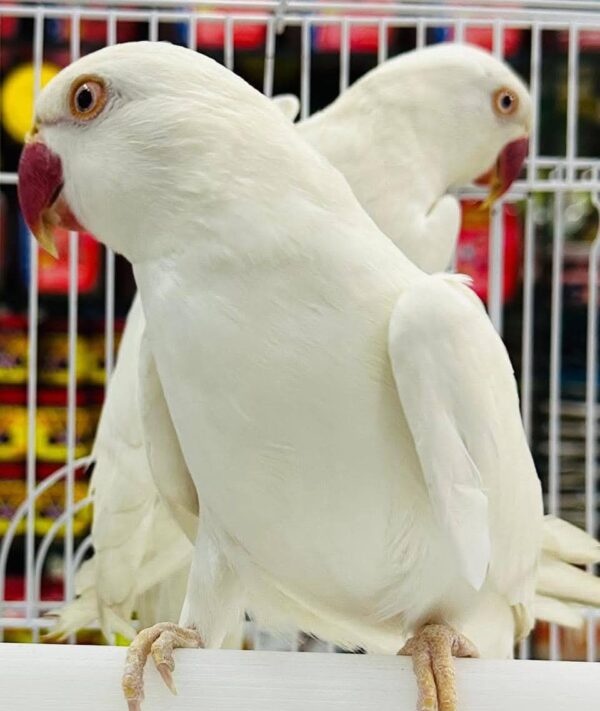
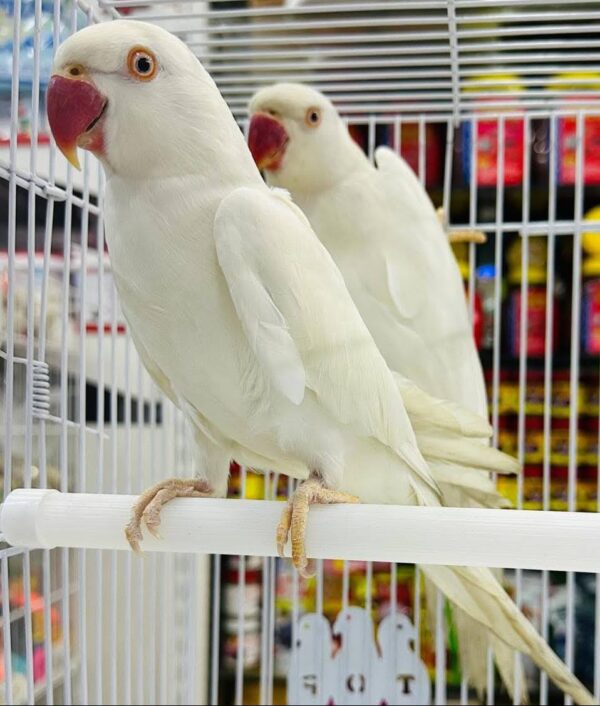
At The Parrots Exotic Store, the Indian White Ring Neck Parakeet Parrot is admired for its striking snow-white plumage, graceful body structure, and refined appearance. This rare color mutation displays a clean, luminous white tone that highlights the bird’s elegant long tail and expressive eyes. Because of its rarity and beauty, the White Ring Neck Parakeet is highly valued by collectors and discerning parrot owners.
Moreover, these parrots reach an adult size of approximately 15–17 inches, giving them an impressive yet manageable presence. With excellent care, they enjoy a long lifespan of 25–30 years, making them a true lifelong companion. Their calm confidence and alert behavior reflect their strong genetics and high intelligence.
Hand-Fed for Exceptional Bonding and Gentle Temperament
Every Indian White Ring Neck Parakeet Parrot from The Parrots Exotic Store is carefully hand-fed from an early age. This early nurturing builds trust, reduces fear, and encourages strong bonding with humans. As a result, hand-fed birds adapt smoothly to new homes and display calmer, more affectionate behavior.
In addition, our hand-feeding program includes daily interaction, gentle handling, and exposure to common household activity. Consequently, these parrots grow into confident, well-adjusted companions that respond positively to training and attention. Their balanced temperament makes them suitable for dedicated beginners as well as experienced parrot owners.
Intelligence, Talking Ability, and Personality
Indian White Ring Neck Parakeets are highly intelligent and naturally curious. They quickly learn routines, recognize familiar voices, and enjoy mental challenges. With consistent training, many develop clear speech and can mimic words, whistles, and household sounds.
Furthermore, their personality combines independence with sociability. They enjoy interaction while also appreciating respectful personal space. When owners provide regular engagement and mental stimulation, these parrots remain emotionally balanced, alert, and deeply engaging.
Feeding and Nutrition Guidelines
A proper diet is essential to maintain the pristine white plumage, strong immunity, and overall health of Indian White Ring Neck Parakeets. The Parrots Exotic Store recommends the following feeding plan:
Recommended Foods:
-
High-quality formulated parrot pellets
-
Seed mixes offered in moderation
-
Fresh fruits such as apple, pear, banana, berries, and melon
-
Fresh vegetables including carrots, broccoli, bell peppers, spinach, and leafy greens
Foods to Avoid:
-
Avocado, chocolate, and caffeine
-
Alcohol and salty or sugary foods
-
Onion, garlic, and rhubarb
Fresh, clean water should always be available and replaced daily.
Care, Housing, and Daily Enrichment
Indian White Ring Neck Parakeets thrive in environments that provide space, structure, and daily interaction.
Housing: A spacious cage with multiple perches, swings, and chew toys supports physical health.
Social Interaction: Daily engagement strengthens bonding and prevents boredom.
Mental Enrichment: Puzzle toys, foraging activities, and training sessions keep their intelligent minds active.
Health Care: Routine avian veterinary visits and preventative care support long-term well-being.
With proper care, these parrots often form strong emotional bonds and enjoy being part of daily household life.
Safe Domestic and International Shipping
The Parrots Exotic Store offers secure domestic and international shipping for all hand-fed parrots. Each Indian White Ring Neck Parakeet travels in a well-ventilated, temperature-controlled enclosure designed to minimize stress. In addition, we provide clear post-arrival guidance to help your parrot settle comfortably into its new home.
Frequently Asked Questions
Is the Indian White Ring Neck suitable for first-time owners?
Yes, provided the owner commits to daily interaction, training, and proper care.
Do Indian White Ring Necks talk?
Yes, many develop strong speech and mimicry skills with consistent training.
How long do they live?
They typically live 25–30 years with proper nutrition and care.
Are they affectionate?
They are social and interactive, while also valuing respectful handling and independence.
Reviews
There are no reviews yet.